Observing What Shouldn’t Be There: Cooperative Inquiry with the Agents of a Non-Mediumistic Apport Case
Ramsés D’León
Unidad Parapsicológica de Investigación, Difusión y Enseñanza (UPIDE)
Parapsychology is a field where the most striking phenomena tend to refuse two things at once. They refuse to happen on schedule, and they refuse to happen in laboratories. Apports, the apparent spontaneous appearance of physical objects without a conventional cause, are a textbook example. They have historically been documented around mediums in séance rooms, where the observer chooses the setting. But what happens when the phenomenon chooses you?
This lecture is built around a case my colleagues Alfredo Silva, Alex Álvarez and I published in 2025 in the Journal of the Society for Psychical Research (D’León et al., 2025): a recurrent apport phenomenon, mostly involving coins, that has been following a non-mediumistic couple, whom we call HM and LS, through four houses on the outskirts of Mexico City since 2018. Between June 2021 and July 2022 alone, we documented 42 events. Two of them were captured on high-definition surveillance video in real time, with the sound of a coin landing 1.5 to 1.7 seconds before anything entered the camera frame.
I want to use this case as an excuse to talk about something more general. What does it actually mean to observe phenomena that are uninvited, recurrent, intimate, and lived by people who are not laboratory subjects but co-experiencers of their own life?
Three Problems of Observation
The first problem is temporal. Apports do not arrive by appointment. Our six cameras ran continuously for thirteen months. Most of the time, nothing happened.
The second problem is spatial. HM and LS reported that 40% of events occurred in their main bedroom. Three months into the study, in September 2021, we agreed with them to switch that camera off. Privacy mattered more than data. We knowingly threw away the most productive observation window of the entire study. I will discuss why that decision was both correct and methodologically painful.
The third problem is epistemic. Who is doing the observing? In a classical experiment, the answer is the experimenter, with the subject as the observed. In our case, it could not work like that. HM and LS were not subjects in front of us. They were the ground on which the phenomenon was happening. They knew their house, their patterns, their bodies, their history. They had been the only witnesses for years, and anything we recorded that they could not contextualize was almost meaningless.
So we did not treat them as subjects. We treated them as co-investigators.
Cooperative Inquiry as an Observation Paradigm
The framework we used is called cooperative inquiry. It comes from action research traditions, not from parapsychology (Heron, 1996; Heron & Reason, 2001). It assumes that the people who live inside the phenomenon hold knowledge the visiting researcher does not, and that the only way to access it is to invite them into the design itself.
Concretely, in our study this meant the following:
- HM and LS chose the camera locations. They told us where the “hotspots” of the house were, and our analysis confirmed they were right: 40% of events in the main bedroom, 26% on the stairs, 17% in the TV room.
- HM tracked his own emotional state in real time for each event. This gave us a phenomenological data layer we could never have collected from the outside. The dominant state turned out to be “relaxed” (44%), not “depressed” as he had previously assumed. The cooperative method corrected a self-interpretation that decades of personal experience had calcified.
- LS noticed body signs, particularly a sudden abdominal stiffness, that preceded apport events. These signs are now part of our event-detection protocol.
- When the couple needed answers that empirical methods could not provide, we honored that with a second study phase that included consultations with three mediums (one certified by the Windbridge Research Center; Beischel, 2007) and a channeler, transparently reported alongside the camera evidence.
This is not soft methodology. In our view, it is the only honest way to study a phenomenon whose primary witnesses outnumber and outdate the visiting researcher by years.
Lecture Summary
In 45 minutes, I will walk through five things.
The case itself. Who HM and LS are, how the phenomenon presents, and why a recurring stream of mint-condition $20 Mexican peso coins, which represent only 0.51% of national circulation, is more than a curiosity.
The observation architecture. Six HD cameras, numismatic analysis, neuropsychological evaluation of HM, the two real-time recordings, the unexplained camera disruptions, and the bedroom we deliberately stopped watching.
The cooperative inquiry method. How decisions were made with HM and LS, where this improved the data, where it created uncomfortable trade-offs, and how I would do it differently next time.
Observation as relationship. The case for treating the agents of a recurrent phenomenon as research partners. The risks include contamination, advocacy bias, and loss of blinding. The benefits include access to data no external protocol can recover, and an ethical stance that the agents of psi phenomena have earned by living through them.
A practical proposal for the field. A tiered methodological hierarchy (Tier 1 to 3 in the JSPR paper) that any team could adopt when faced with a similar case, scaled to the resources they actually have.
This is not a lecture about whether psi is real. It is a lecture about what we are willing to call observation when the conditions we usually require, namely control, repeatability, and neutrality of the observer, are precisely what the phenomenon refuses to grant.
I think we owe the field that conversation.
References
Beischel, J. (2007). Contemporary methods used in laboratory-based mediumship research. Journal of Parapsychology, 71, 37–68.
D’León, R., Silva, A., & Álvarez, A. A. (2025). Investigating coin-based apports: A methodological approach to non-mediumistic recurrent physical anomalies. Journal of the Society for Psychical Research, 89(4), 193–224. https://doi.org/10.63499/7ttg1h83
Heron, J. (1996). Co-operative inquiry: Research into the human condition. Sage.
Heron, J., & Reason, P. (2001). The practice of co-operative inquiry: Research “with” rather than “on” people. In P. Reason & H. Bradbury (Eds.), Handbook of action research: Participative inquiry and practice (pp. 179–188). Sage.
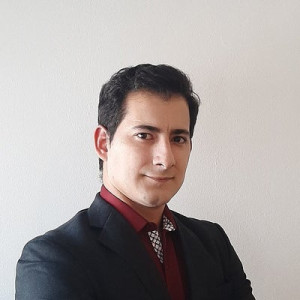
Ramsés D’León
Unidad Parapsicológica de Investigación, Difusión y Enseñanza (UPIDE)
Bio
Ramsés D’León is a Mexican parapsychology researcher and administrator. He is Founding Member and President of CISC, Chief Researcher at UPIDE, Mexico’s International Liaison for the Parapsychological Association, and Board Member of the Rhine Research Center. His interests include psychokinesis, anticipatory physiology, and AI. He chaired the 65th PA Convention (Mérida, 2024) and is lead author of the 2025 JSPR coin- apports case study.